
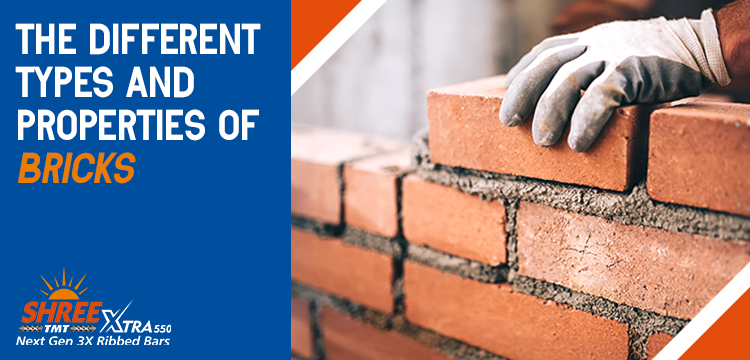
The Different Types and Properties of Bricks: A Complete Guide
Table of Contents:
What Are Bricks?
Bricks are fundamental building materials that have shaped construction for millennia. These rectangular blocks, manufactured from various raw materials, serve as the backbone of residential, commercial, and industrial structures worldwide. A brick’s primary function is to provide structural strength, thermal insulation, and aesthetic appeal to buildings. Modern bricks are engineered to meet specific construction requirements, offering varying degrees of strength, water resistance, and durability depending on their composition and manufacturing process.
Types of Bricks Used in Construction
- Burnt Clay Bricks
The most traditional type, burnt clay bricks are made from clay molded into blocks and fired in kilns at temperatures exceeding 1000°C. These bricks offer compressive strength ranging from 3.5 to 35 N/mm² and are ideal for load-bearing walls. Their natural composition provides excellent fire resistance, good thermal insulation, and durability that can last centuries.
- Fly Ash Bricks
An environmentally sustainable option, fly ash bricks utilize industrial waste (fly ash from thermal power plants) mixed with cement, sand, and water. These bricks are lighter, stronger, and more uniform than traditional clay bricks. They offer superior water resistance, better thermal insulation, and are cost-effective while reducing environmental impact.
- Concrete Bricks
Manufactured from concrete with various aggregates, these bricks provide high compressive strength and can be produced in multiple sizes and finishes. Concrete bricks excel in sound insulation and are perfect for facades, fencing, and partition walls. Their precise dimensions ensure consistent construction quality.
- Sand Lime Bricks
Created by mixing sand and lime under high pressure and steam curing, these calcium silicate bricks feature a smooth gray finish and uniform appearance. They offer exceptional load-bearing capacity, accurate dimensions, and superior fire resistance. Their smooth surface often eliminates the need for plastering, reducing finishing costs.
- Engineering Bricks
Specifically designed for demanding applications, engineering bricks possess high compressive strength and minimal water absorption. Available in Class A and Class B varieties, they’re essential for foundations, damp-proof courses, retaining walls, and underground construction where moisture resistance is critical.
Why Choosing the Right Brick Matters
Selecting the appropriate brick type is crucial for construction success and long-term building performance. The right choice directly impacts structural integrity, ensuring your building can safely bear loads and withstand environmental stresses. Quality bricks also enhance energy efficiency through proper thermal insulation, reducing heating and cooling costs over the building’s lifetime.
Durability is another critical factor—choosing suitable bricks for your climate and application prevents premature deterioration, water damage, and costly repairs. The right brick selection also affects your project budget, balancing initial material costs with long-term maintenance expenses and energy savings.
Whether you’re building a residential home, commercial structure, or industrial facility, understanding these brick types and their properties ensures you choose the right material for lasting, quality construction. Quality bricks, combined with proper construction techniques and reinforcement like TMT bars, create structures that stand the test of time.


