Understanding Deshuttering Period for Slabs, Beams & Columns
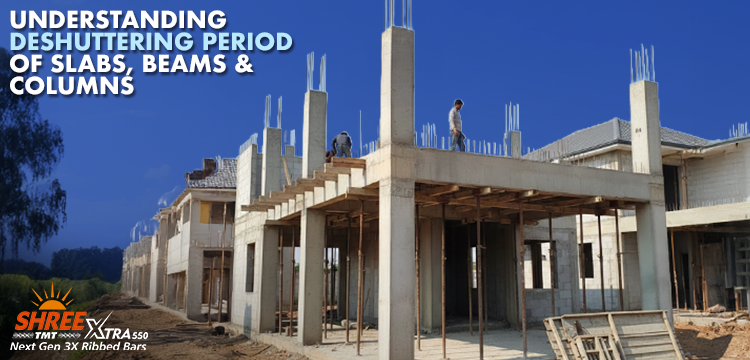
When constructing any RCC structure, timing is everything—especially when it comes to removing formwork. Deshuttering, the process of removing temporary molds and supports after concrete pouring, directly impacts structural integrity. Remove formwork too early, and you risk cracks, deflection, or even collapse. Understanding the correct deshuttering period for different structural elements ensures your construction stands strong for decades.
What Is Deshuttering?
Deshuttering refers to the removal of shuttering (formwork) from concrete surfaces once the concrete has gained sufficient strength. This process must be carried out carefully and at the right time to prevent damage to the fresh concrete. The timing depends on the type of structural element, cement grade, ambient temperature, and applicable construction standards.
Standard Deshuttering Periods as Per IS 456
The Indian Standard IS 456:2000 provides clear guidelines for minimum deshuttering periods under normal conditions (using OPC at temperatures above 15°C):
- Vertical Formwork (Columns and Walls) Columns and wall sides can be deshuttered within 16 to 24 hours after casting. Since these elements don’t bear significant loads immediately, early removal is permissible once the concrete surface is hard enough to avoid damage.
- Slabs For slabs with props left in place, the soffit formwork can be removed after 3 days. However, if props are to be removed entirely, the waiting period extends significantly—7 days for slabs spanning up to 4.5 metres and 14 days for longer spans. This ensures the slab has developed adequate strength to support its own weight.
- Beams Beam sides can be stripped after 3 days, similar to slab soffits with props. For complete removal of beam soffit formwork and props, the period ranges from 7 days (for spans up to 4.5 metres) to 14 days (for spans between 4.5 and 6 metres) and 21 days for spans exceeding 6 metres.
Factors That Affect Deshuttering Time
Several factors influence when formwork can be safely removed. Cold weather slows down concrete curing, requiring extended deshuttering periods. Conversely, using accelerators or rapid-hardening cement can reduce waiting time. The load the structure will bear, concrete mix design, and humidity levels also play crucial roles in determining the appropriate deshuttering schedule.
Why Proper Deshuttering Matters
Premature deshuttering is one of the leading causes of structural defects in construction. When formwork is removed before concrete reaches adequate strength, the structure may develop surface cracks, permanent deflection, or in severe cases, partial collapse. These defects compromise not just aesthetics but the long-term durability and safety of the building.
The Role of Quality Reinforcement
While proper deshuttering ensures the concrete matrix develops correctly, the reinforcement within plays an equally vital role. High-quality TMT bars provide the tensile strength that concrete lacks, working together with properly cured concrete to create resilient structures. Using superior reinforcement from trusted manufacturers adds another layer of safety to your construction.
Adhering to recommended deshuttering periods isn’t just about following codes—it’s about building structures that protect lives and stand the test of time. When combined with quality materials and skilled workmanship, proper construction practices deliver results that last generations.
![12+ Most Valuable Components of Building Structure [Updated 2025]](https://shreetmt.step1inc.com/wp-content/uploads/2025/09/12-Most-Valuable-Components-of-Building-Structure.png)