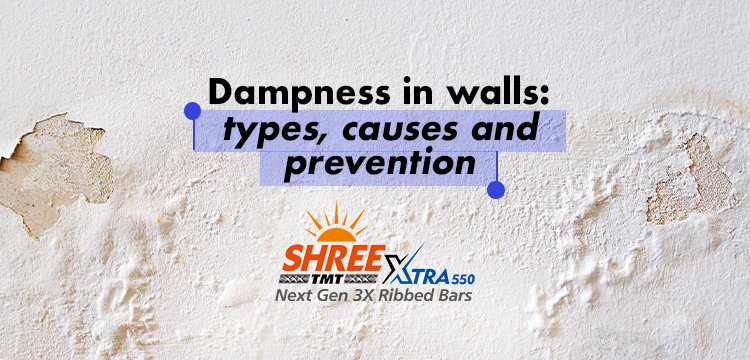
Dampness in Walls: Types, Causes and Prevention
Dampness is one of the most common—and most damaging—problems a building can face. Left unchecked, moisture in walls can weaken structural elements, trigger mould growth, ruin interior finishes, and even pose health risks to occupants. Whether you are constructing a new home or maintaining an existing one, understanding the types, causes, and prevention of wall dampness is essential.
Types of Dampness in Walls
- Rising Damp occurs when groundwater travels upward through the walls by capillary action. It is most common on ground floors and basements, and typically appears as damp patches or tide marks near the base of walls. Over time, rising damp can cause plaster to crumble, paint to peel, and salts to crystallise on the wall surface.
- Penetrating Damp happens when rainwater or external moisture seeps through the walls from the outside. This is usually caused by cracks in the external plaster, damaged roofing, blocked gutters, or poorly sealed windows. Penetrating damp can appear as wet patches on walls and ceilings that worsen during heavy rain.
- Condensation Dampness is the most common type in residential buildings. It forms when warm, moisture-laden air comes into contact with cooler wall surfaces, causing water droplets to collect. Kitchens, bathrooms, and poorly ventilated rooms are particularly susceptible. Persistent condensation leads to black mould around windows, corners, and ceilings.
Common Causes of Dampness
Several factors can invite moisture into your walls. Poor construction practices—such as using low-quality cement, inadequate curing of concrete, or skipping waterproofing measures—are among the leading causes. When concrete is not cured properly, it remains porous and vulnerable to water absorption. Faulty plumbing, including leaking pipes and overflowing water tanks, can introduce hidden moisture into walls from the inside. Inadequate drainage around the foundation allows groundwater to rise and penetrate the structure. Cracks in external walls, even hairline ones, create easy pathways for rainwater to seep through during monsoons. Finally, poor ventilation traps moisture-laden air indoors, accelerating condensation on cooler surfaces.
How to Prevent Dampness
Prevention starts at the construction stage itself. Installing a damp-proof course (DPC)—a barrier of impervious material placed about 150 mm above ground level—is essential to stop moisture from rising through the foundation walls. Using high-quality cement and ensuring adequate curing time strengthens the concrete and improves its natural resistance to water penetration. Applying waterproof coatings or primers on external walls adds another layer of defence against rainwater. Proper site grading and functional drainage systems direct water away from the foundation instead of letting it pool near the structure. Inside the building, adequate ventilation through windows, exhaust fans, and air vents helps reduce humidity and prevents condensation. Regular maintenance—promptly repairing cracks, cleaning gutters, and checking plumbing—goes a long way in keeping dampness at bay.
Protect Your Structure from the Inside Out
Dampness does not just damage walls—it can corrode the steel reinforcement inside your RCC structure, compromising its strength over time. This is why the quality of TMT bars you use matters just as much as your waterproofing strategy. Shree TMT Xtra 550 bars are manufactured with advanced corrosion-resistant technology and a unique 3X rib-on-rib design that delivers superior bonding with concrete, leaving fewer voids for moisture to exploit. By choosing Shree TMT bars, you add a critical layer of protection against the hidden damage that dampness can cause to your building’s reinforced framework.
A strong building is a dry building—and it starts with choosing the right materials at every stage of construction.