What is Pointing in Construction: Types and Benefits
When we think about what makes a building strong and long-lasting, we often focus on its foundation, concrete mix, or the quality of TMT bars used in the framework. But there’s another detail that quietly holds everything together — pointing.
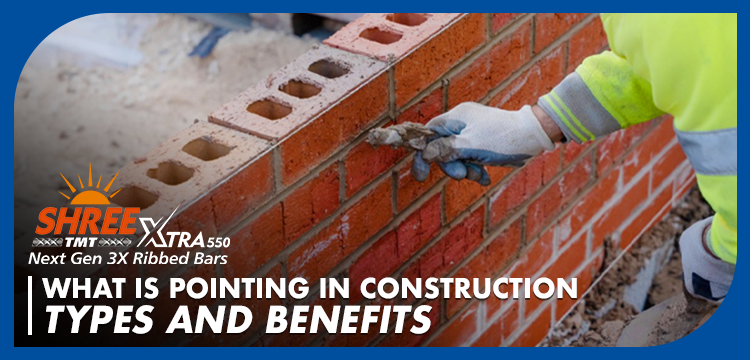
Pointing is the process of finishing the joints between bricks, stones, or concrete blocks with mortar. It may seem like a finishing touch, but done right, it plays a crucial role in the durability, weatherproofing, and appearance of any masonry structure. Whether you’re building a home, a boundary wall, or a commercial complex, good pointing is a mark of quality construction.
Why Pointing Matters
Bricks and stones typically have a longer lifespan than the mortar that binds them. This is why mortar needs pointing. Over time, untreated or poorly finished mortar joints become entry points for rainwater, moisture, and dust — all of which silently weaken the structure from within.
Pointing protects mortar joints from the damaging effects of the atmosphere, ensuring their longevity and strength. It also improves the appearance of the wall by highlighting the pattern, thickness, colours, and texture of the joints.
At Shree TMT, we believe strong construction is built on strong decisions — from the steel used in the frame to the mortar that holds the masonry together. Pointing is one such decision that every builder and homeowner should take seriously.
Common Types of Pointing
1. Flush Pointing Flush pointing is the most broadly used and durable type. Mortar joints are carefully filled, and excess mortar is removed to give a smooth and seamless finish. By eliminating spaces that can gather dust or water, flush pointing helps improve the longevity and cleanliness of the structure.
2. Recessed Pointing Recessed pointing involves filling the spaces between bricks with mortar and pressing it slightly inside the wall, creating a small gap of about 5 mm or more. The indented lines add depth and shadows to the wall, giving it a clean, modern look. However, this type is best avoided in regions with heavy rainfall, as water can collect in the recessed joints.
3. Struck Pointing Struck pointing involves filling mortar flush with the bricks and then pressing the top side of the joint inward, generating a slope. This sloped shape helps rainwater drain off quickly, reducing water buildup on the wall. It’s a practical choice for exterior walls in India’s monsoon-heavy climate.
4. Tuck Pointing Tuck pointing is a detailed technique where the gaps between bricks are filled with mortar, and a groove is made in the center — typically 5 mm wide and 3 mm deep — which is then filled with white cement putty. This creates a striking contrast that makes the wall look more attractive.
5. V-Pointing V-pointing involves filling the gaps between bricks and mortar and levelling it with the wall’s surface, after which a V-shaped groove is made in the joint using a special tool. This is popular for decorative facades and feature walls.
Key Benefits of Pointing
- Structural strength: Properly pointed and reinforced mortar joints add strength and stability to the masonry construction, improving its overall structural integrity.
- Weatherproofing: Pointing serves as a protective barrier, shielding external walls from moisture and preventing water penetration, thereby increasing the longevity of the masonry.
- Reduced maintenance: With effective pointing, the need for frequent repairs and maintenance of the masonry is greatly reduced, leading to cost savings over the building’s lifespan.
- Better property value: Well-executed pointing can significantly enhance the curb appeal of a property, making it more desirable to potential buyers.
The Shree TMT Perspective
A building is only as strong as the sum of its parts. The TMT bars in your structure bear the load — but the masonry walls, when properly pointed, protect everything around them. At Shree TMT, we are committed to supporting builders, contractors, and homeowners with not just premium-quality steel but also the knowledge to build right, at every stage.
Good construction is in the details. Pointing is one of them.