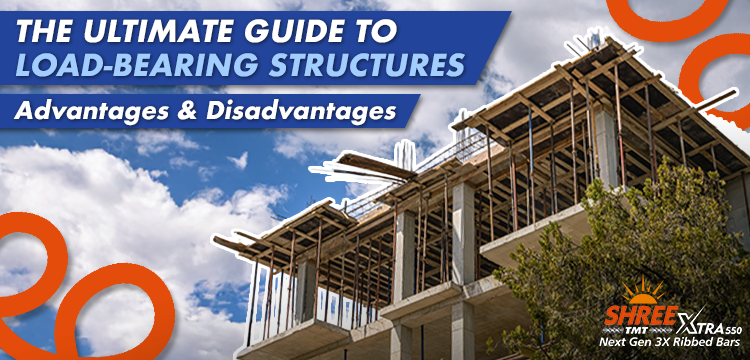
The Ultimate Guide to Load-Bearing Structures: Advantages & Disadvantages
Table of Contents:
Ever walked into a well-built home and felt safe? That secure feeling comes from thoughtful construction choices—particularly how the building is designed to handle weight and stress. Load-bearing structures are one such choice, quietly doing the heavy lifting to keep your building standing strong for decades. Whether you’re planning a residential project, commercial complex, or industrial facility, understanding how load-bearing structures work can help you make smarter decisions about your construction investment. At Shree TMT, we’ve spent years perfecting the steel that makes these structures reliable and long-lasting.
What Are Load-Bearing Structures?
Load-bearing structures are designed to support their own weight plus additional loads from occupants, equipment, and environmental factors. These systems transfer all structural loads directly to the foundation. In traditional construction, load-bearing walls carry the entire weight of the building, making them the primary load paths rather than relying on internal framing systems.
Advantages of Load-Bearing Structures
- Cost-Effectiveness Load-bearing structures eliminate the need for extensive steel framing or concrete columns throughout the building. This reduces material costs significantly, making construction more economical, especially for mid-rise residential and commercial projects.
- Faster Construction With fewer internal structural elements to install, construction timelines are considerably reduced. Walls can be erected quickly, and the building envelope can be completed faster, accelerating project completion.
- Better Space Utilization Since load-bearing walls serve dual purposes—both structural support and room partition—they maximize usable floor space. There’s no need for additional columns or beams taking up valuable interior space, ideal for residential units and offices.
- Durability & Stability When constructed with premium materials like Shree TMT steel bars, load-bearing walls provide excellent durability and can last for decades with minimal maintenance. The monolithic nature of load-bearing walls creates inherent structural stability.
- Thermal & Sound Insulation Thick load-bearing walls naturally provide superior thermal resistance and sound dampening compared to skeleton frame structures, reducing energy costs and creating more comfortable living and working environments.
While load-bearing structures offer significant advantages, it’s important to understand their limitations. Like any construction method, they have certain drawbacks that builders and architects must consider carefully during the planning phase.
Disadvantages of Load-Bearing Structures
Design Limitations Load-bearing structures restrict architectural flexibility. Wide open floor plans and large spans are difficult to achieve without extensive reinforcement, limiting creative design possibilities.
Difficulty in Modifications Any future alterations or renovations become challenging and expensive. Removing or modifying walls requires careful engineering assessment, and structural reinforcement is often necessary.
Limited Height Load-bearing structures are impractical for tall buildings. The cumulative weight of multiple stories places enormous pressure on lower walls, making them unsuitable for high-rise construction.
Vulnerability to Earthquakes In seismic zones, load-bearing structures may be vulnerable without proper reinforcement. The rigid nature of bearing walls can lead to brittle failure during earthquakes, requiring additional bracing and reinforcement using quality steel.
Moisture & Durability Concerns Load-bearing walls are more susceptible to moisture infiltration and environmental damage. Poor construction or water penetration can compromise the entire structural integrity.
Conclusion
Load-bearing structures remain a practical choice for many construction projects, offering economic and space-saving benefits. However, they come with design limitations and maintenance considerations. The key to successful load-bearing construction lies in using superior materials—like Shree TMT’s high-tensile steel bars—and professional design. Whether you choose load-bearing or frame structures, quality materials are essential for creating safe, durable buildings that stand the test of time. Consult with structural engineers to determine the best system for your specific project requirements.