
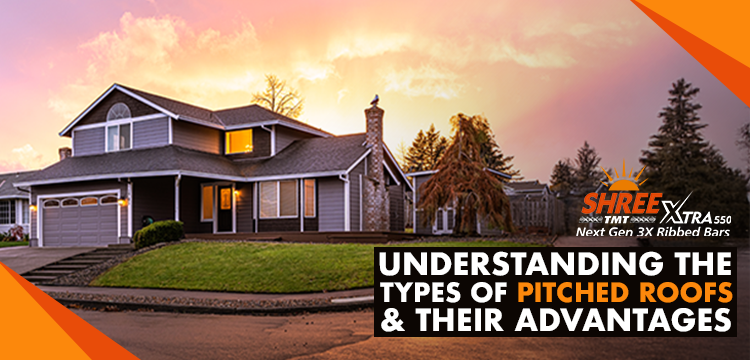
Understanding the Types of Pitched Roofs & Their Advantages
Table of Contents:
Pitched roofs remain one of the most popular roofing choices in residential and commercial construction. Unlike flat roofs, pitched roofs feature a sloped design that offers both functional and aesthetic benefits. Understanding the different types of pitched roofs and their advantages can help builders, architects, and homeowners make informed decisions for their construction projects.
Types of Pitched Roofs for Modern Construction
1. Gable Roof
The gable roof is the most recognizable pitched roof design, featuring two sloping sides that meet at a central ridge. Its simple triangular shape makes it cost-effective and easy to construct. Gable roofs provide excellent water drainage and ample attic space, making them ideal for areas with heavy rainfall.
2. Hip Roof
Hip roofs have slopes on all four sides that converge at the top, creating a pyramid-like structure. This design offers superior stability and wind resistance compared to gable roofs, making them suitable for regions prone to high winds and storms.
3. Mansard Roof
Characterized by two slopes on each side with the lower slope being steeper, mansard roofs maximize usable attic space. This French-inspired design is popular in urban areas where additional living space is valuable.
4. Gambrel Roof
Similar to mansard roofs but with slopes only on two sides, gambrel roofs are commonly seen in barn-style architecture. They offer excellent vertical space for storage or additional rooms while maintaining relatively simple construction requirements.
5. Skillion Roof (Shed Roof)
A skillion roof features a single sloping surface, creating a modern, minimalist aesthetic. This pitched roof type is cost-effective, easy to install, and provides excellent drainage. Skillion roofs are increasingly popular in contemporary architecture and extensions.
6. Butterfly Roof
The butterfly roof features two roof surfaces angled upward from a central valley, resembling a butterfly’s wings. This unique pitched roof design maximizes natural light and ventilation while creating dramatic architectural impact, though it requires careful waterproofing in the valley.
7. Saltbox Roof
Saltbox roofs are asymmetrical pitched roofs with one long slope and one short slope. This traditional design originated in colonial architecture and offers practical advantages like efficient space utilization and excellent weather protection.
Key Advantages of Pitched Roof Systems
Superior Water Drainage and Weather Protection
The primary advantage of pitched roofs is their exceptional water drainage capability. The sloped design prevents water accumulation, reducing the risk of leaks, water damage, and structural deterioration—particularly valuable in areas experiencing heavy rainfall or snowfall.
Enhanced Durability and Longevity
Pitched roofs typically outlast flat roofs due to their effective water-shedding properties. When constructed with high-quality TMT steel reinforcement, pitched roofs can withstand decades of weather exposure while maintaining structural integrity.
Better Ventilation and Energy Efficiency
The space created beneath pitched roofs allows for natural ventilation, helping regulate indoor temperatures and reduce moisture buildup. This improves energy efficiency and prevents issues like mold growth and wood rot.
Aesthetic Appeal and Property Value
Pitched roofs add architectural character to buildings, enhancing curb appeal and property value. The variety of styles available allows designers to match roofing choices with overall architectural themes.
Structural Strength with TMT Steel
The triangular geometry of pitched roofs provides inherent structural stability. When properly engineered with quality TMT steel bars for structural support, these roofs can support significant loads while maintaining safety margins.
Choosing the Right Pitched Roof Design
Pitched roofs offer a compelling combination of functionality, durability, and aesthetics. Whether selecting a traditional gable design or a contemporary skillion roof, the structural integrity of your pitched roof depends significantly on the quality of steel reinforcement used in its construction.
TMT bars play a critical role in pitched roof frameworks, providing the tensile strength to beams and slabs needed to support roof loads, resist lateral forces, and maintain structural stability over time. The roof trusses, beams, and columns that form the skeleton of pitched roofs require high-grade TMT steel to ensure safety and longevity.
Shree TMT bars are manufactured with superior strength and ductility, making them ideal for complex pitched roof structures. With excellent corrosion resistance and consistent quality, Shree TMT bars help builders create robust structures that can withstand extreme weather conditions, seismic activity, and heavy load-bearing requirements.


