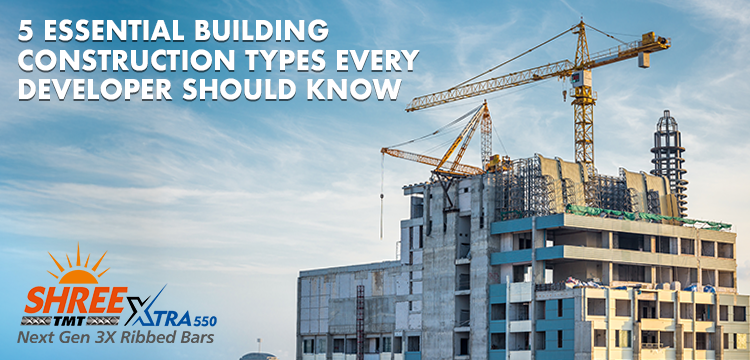
5 Essential Building Construction Types Every Developer Should Know
When planning a construction project, understanding building construction types is fundamental to ensuring structural safety, fire resistance, and long-term durability. Whether you’re building residential homes, commercial complexes, or industrial facilities, selecting the right construction type impacts everything from material selection to insurance costs. In this comprehensive guide, we explore the five primary construction types recognised by building codes worldwide and how quality TMT bars play a crucial role in each.
Type I: Fire-Resistive Construction
Fire-resistive construction represents the highest standard of building safety and durability. This construction type features structural elements made from non-combustible materials designed to withstand fire for extended periods. High-rise buildings, hospitals, and large commercial structures typically employ this construction method.
Key characteristics include:
- Reinforced concrete or protected steel frameworks
- Concrete floors and roof systems
- Fire resistance ratings typically exceeding 3-4 hours
- Minimal structural damage during fire events
Quality TMT bars are essential in fire-resistive construction, providing the tensile strength needed for reinforced concrete elements while maintaining structural integrity under extreme temperatures.
Type II: Non-Combustible Construction
Non-combustible construction utilises materials that won’t ignite or contribute to fire spread, though structural elements may lack the fire-resistance ratings of Type I buildings. This category is common in modern warehouses, shopping centres, and medium-rise office buildings where fire safety is important but the building height doesn’t mandate maximum fire resistance.
Materials commonly used include steel frames, concrete block walls, and metal roof decking. While these materials are non-combustible, they may require additional protection to achieve specific fire-resistance ratings. The use of high-strength TMT bars in concrete components ensures structural stability and earthquake resistance, complementing the non-combustible nature of other building materials.
Type III: Ordinary Construction
Ordinary construction, sometimes called masonry construction, features non-combustible exterior walls typically made from brick, concrete block, or stone, while interior structural elements may include combustible materials like wood. This construction type is prevalent in low-rise residential and commercial buildings across India.
The primary advantage lies in the fire-resistant exterior walls that help prevent fire spread to adjacent structures. Interior components require fire-retardant treatment or protection to enhance overall safety. TMT reinforcement in masonry walls and concrete elements provides the necessary strength to withstand lateral forces from wind and seismic activity, making ordinary construction both economical and robust for medium-scale projects.
Type IV: Heavy Timber Construction
Heavy timber construction employs large-dimension wooden structural members that provide surprising fire resistance through their mass. When exposed to fire, thick timber members char on the outside while maintaining structural integrity inside, allowing safe evacuation time. This construction type has gained renewed popularity for sustainable building practices.
Building codes specify minimum dimensions for timber columns, beams, and floors to qualify as heavy timber construction. While less common in India than other regions, heavy timber construction is seeing increased use in eco-friendly resorts, heritage restoration, and specialty commercial buildings. Even in timber-dominant structures, concrete foundations and selective reinforcement with TMT bars provide essential support and durability.
Type V: Wood Frame Construction
Wood frame construction represents the most economical building method, commonly used for single-family homes and low-rise residential buildings. This type allows combustible materials for both exterior and interior structural elements, though building codes impose strict limitations on building height and area.
Despite the prevalence of wood, even wood frame buildings require concrete foundations and reinforcement. Quality TMT bars ensure foundation stability, protect against soil movement, and provide anchorage for structural elements. Fire-retardant treatments, sprinkler systems, and compartmentalisation strategies help mitigate fire risks in this construction type.
Choosing the Right Construction Type for Your Project
Selecting the appropriate construction type depends on multiple factors including building height, occupancy type, local building codes, budget constraints, and fire safety requirements. High-rise structures demand fire-resistive construction, while smaller commercial buildings may benefit from the cost-effectiveness of ordinary construction. Understanding these classifications helps architects, engineers, and developers make informed decisions that balance safety, cost, and functionality.Regardless of construction type, the quality of reinforcement materials directly impacts structural performance. Premium TMT bars manufactured to IS 1786:2008 standards provide the strength, ductility, and corrosion resistance essential for long-lasting construction. From fire-resistive high-rises to economical residential projects, choosing the right steel reinforcement ensures your building stands strong for generations. At Shree TMT, we understand that superior construction begins with superior materials. Our range of high-strength TMT bars supports every construction type with consistent quality, certified performance, and reliable durability.